
Mass casualty incident command
Command the scene.
Every patient counted.
One app for the whole incident: triage, patients, METHANE, the scene map, resources and families. On every phone, live, and it keeps working when the signal drops.
Free plan, no card needed. Full plan $99 a month per organisation, plus VAT or sales tax where it applies.
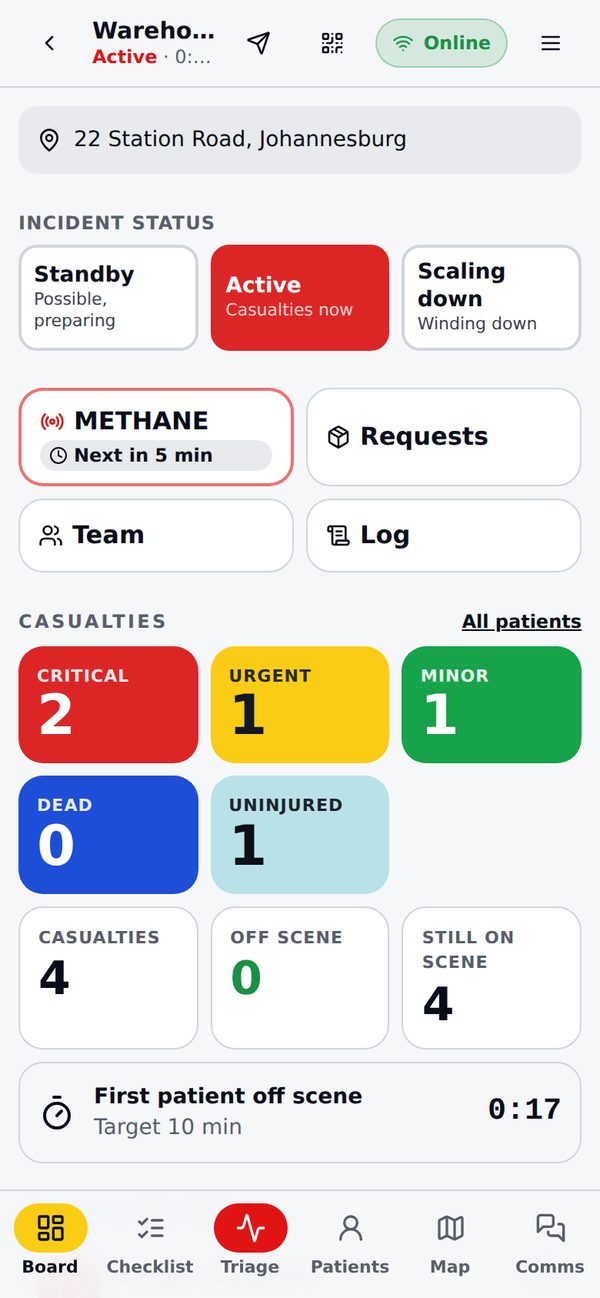
Everything the incident needs, in one place
Built with crews who run mass casualty incidents. Plain screens, big buttons, made for a phone in one hand on a busy scene.
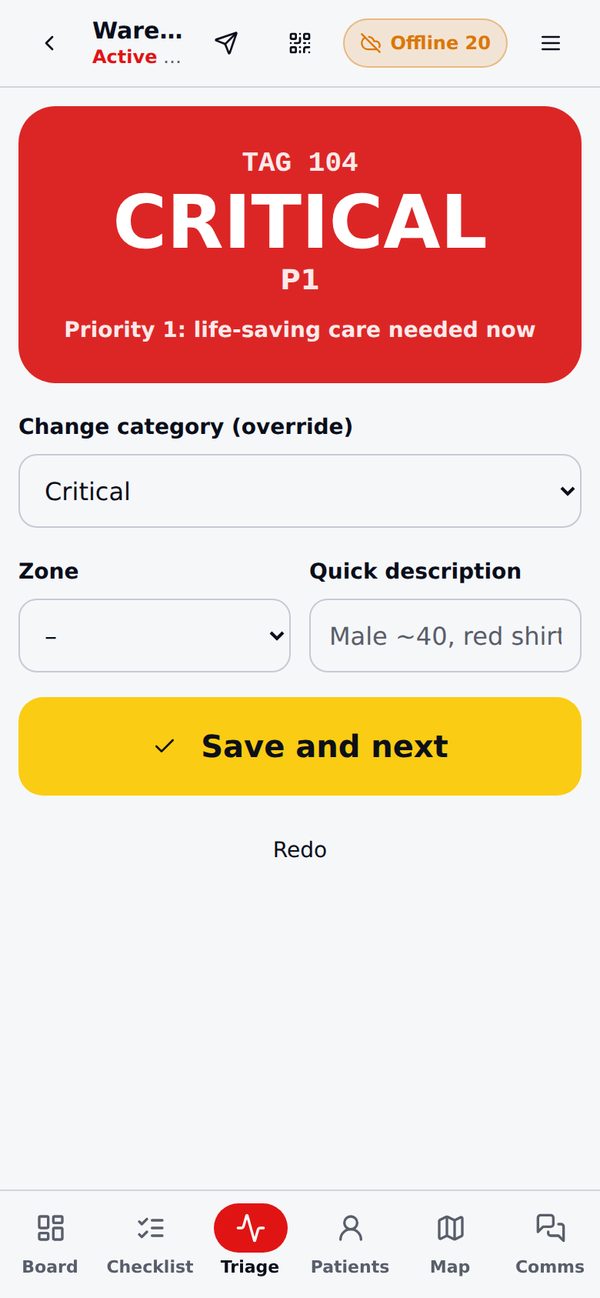
Triage in seconds
Tag number, a few taps, save and next. Sieve and scored sort, with your own triage rules.
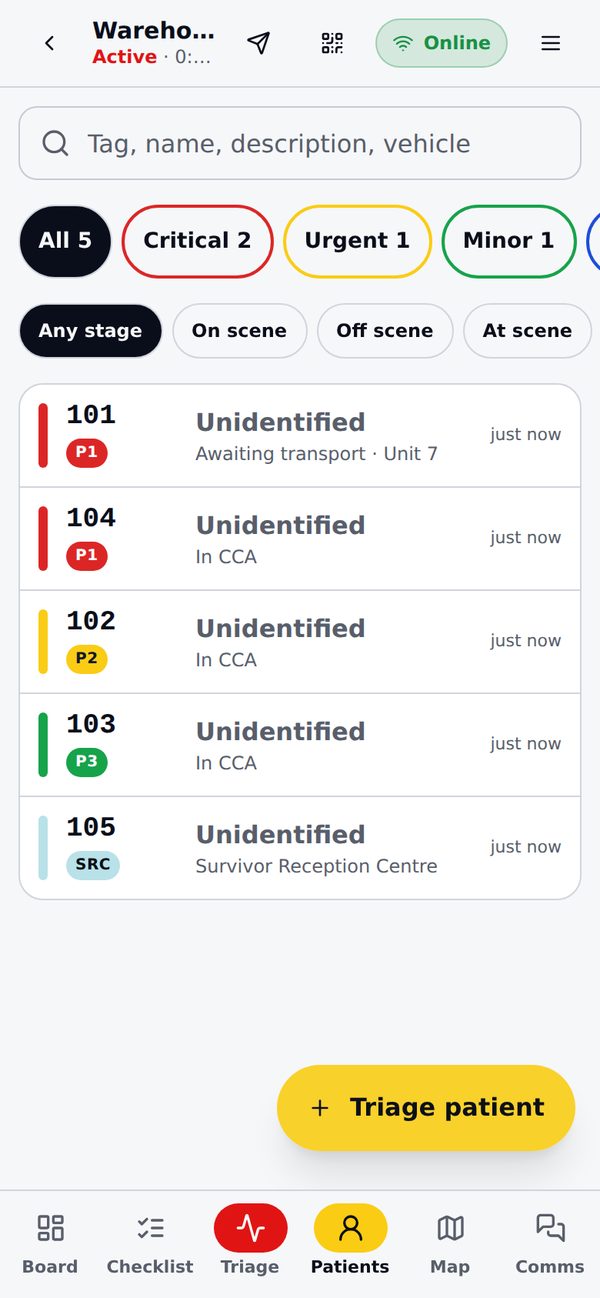
Every patient tracked
Where each patient is, which vehicle took them and to which hospital. Nobody gets lost.
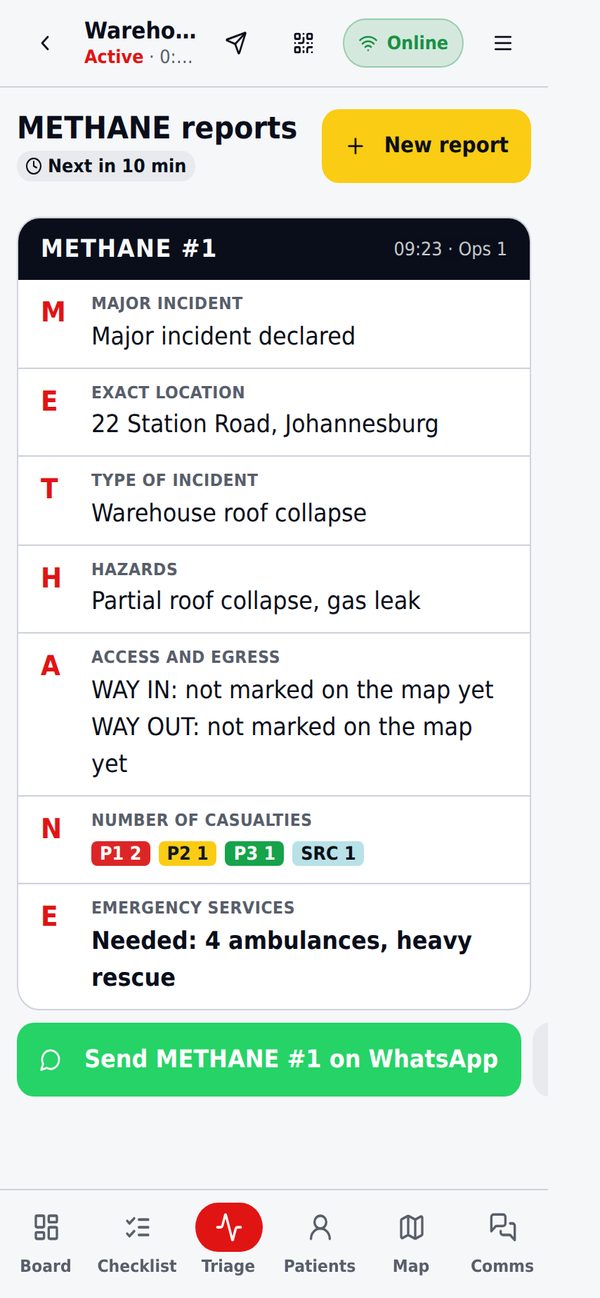
METHANE in one tap
The report fills itself from triage and the map. Sent to everyone, with a reminder when the next one is due.
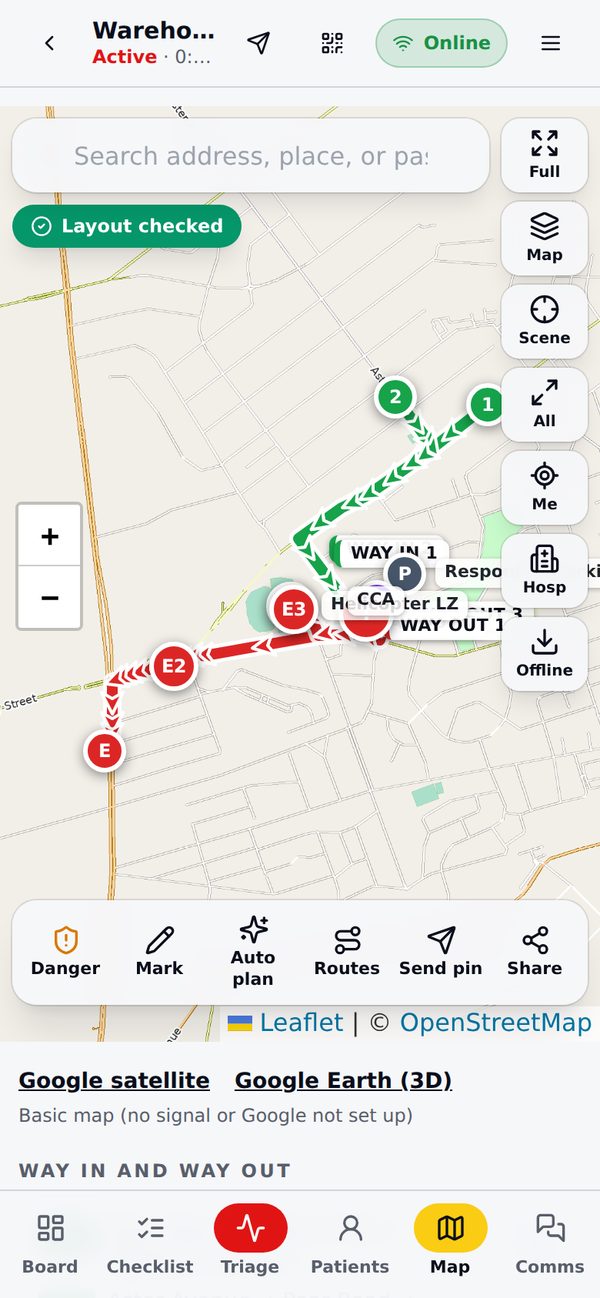
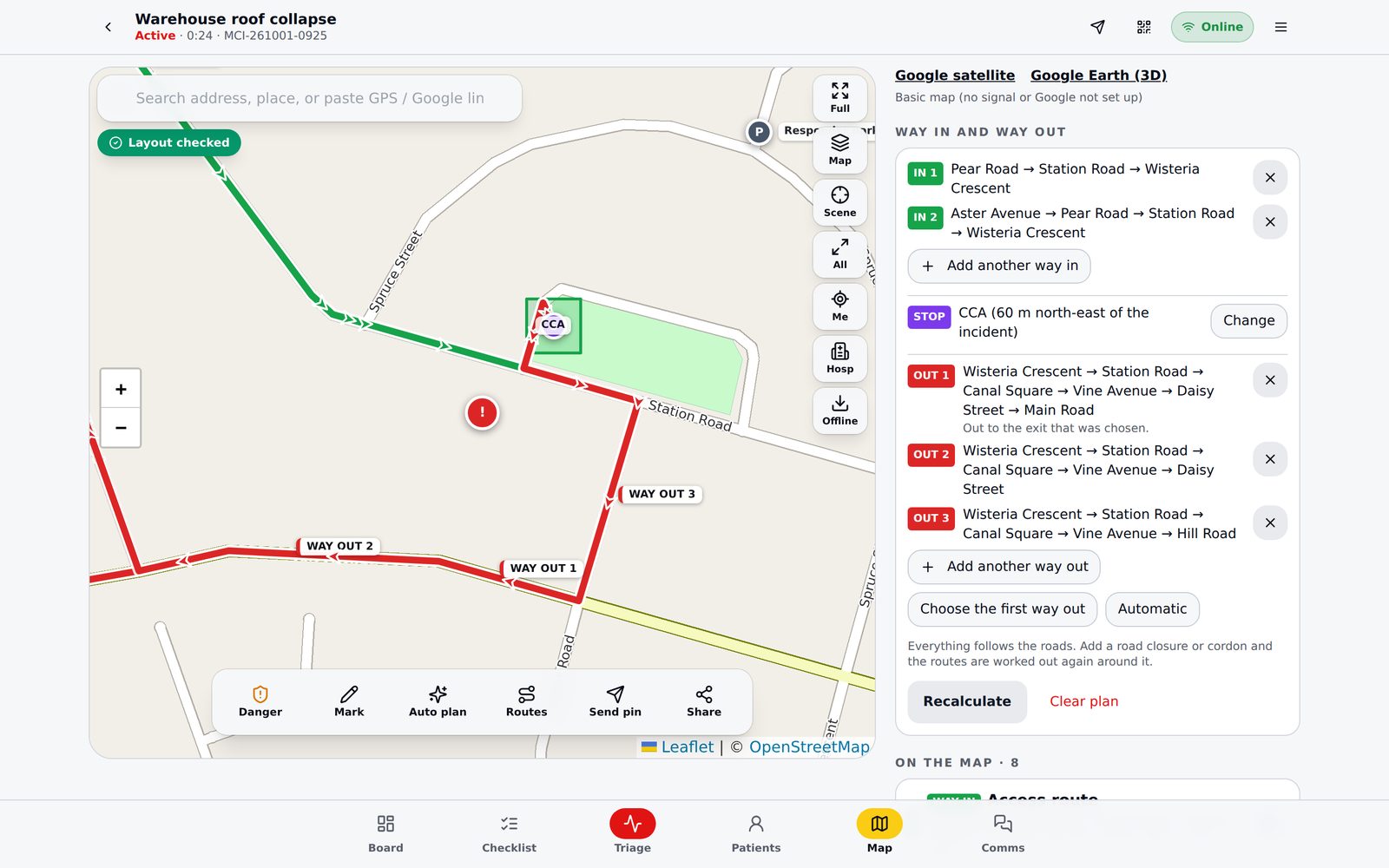
Live scene map
Mark the CCA, RVP, closures and hazards. Auto plan suggests ways in and out on the real roads.
Command roles and checklists
Scene Control, CCA, Triage, Transport. Each role gets its own action card, so nothing is forgotten.
Messages and resource requests
Ask for ambulances or heavy rescue and see when they are on the way, with an ETA.
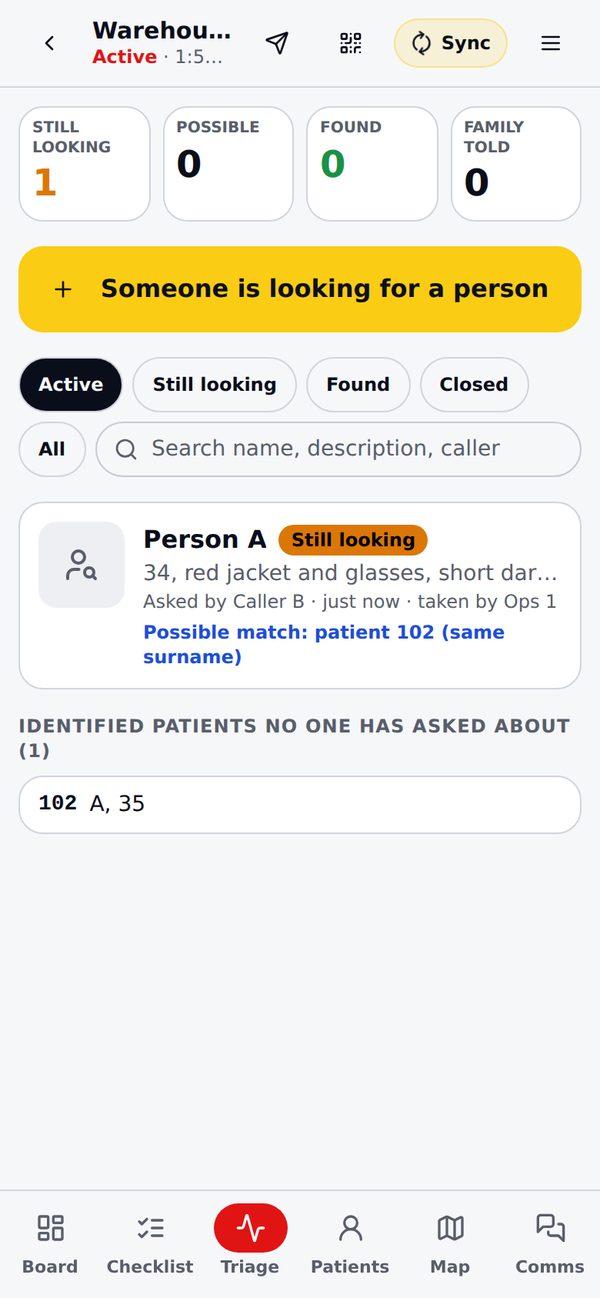
Family desk
Take enquiries from families and match them to patients, then record when the family has been told.
Dispatch console
The control room sees every incident, request, hospital bed and late report on one screen.
Works without signal
Everything saves on the phone first and sends when signal is back. Triage a whole scene offline.
Debrief report
Key times, roles, patients, hospitals and the full timeline, ready to print the moment you close.
For emergency services organisations only. Incident Commander records and coordinates the incident. It does not give medical advice or make clinical decisions: triage results come from your organisation's own protocols, applied by your trained responders.
From the first crew to the control room
- 1Declare. The first crew on scene declares the incident. Everyone in your service gets an alert.
- 2Command. Officers take their command roles, plan the scene on the map and send directions to fire and police.
- 3Triage and transport. Crews triage with the sieve, track every patient and send them to hospitals with free beds.
- 4Report. METHANE fills itself. When it's over, the debrief report is ready to print.
Your data stays yours
Each organisation's incidents and patients are kept completely separate, with checks in the database itself. Everything travels encrypted, and you control who has access and what each role can do.
Questions
Does it work without signal?
Yes. Once you have signed in on a phone, everything you do is saved on the phone first and sent when there is signal again.
Do we need to download it from an app store?
No. It runs from the website and you add it to your home screen in a few taps. It works on iPhone, Android and computers.
Can we change the checklists and triage rules?
Yes. Command roles, checklists, triage colours and questions, lists and hospitals are all set by your own super admin.
What does the free plan include?
Enough to try it properly: up to 3 people and 1 open incident at a time. Alerts, share links, Auto plan, the Google map and the dispatch console are in the full plan.
How do we pay?
By card, $99 a month per organisation (plus VAT or sales tax where it applies), through Paddle, our payment partner. Cancel any time.
Is patient information safe?
Access is by invitation only, each person sees only their own organisation, and all data is encrypted on its way to and from the phone.